Pervious pavement, also called porous pavement, gap-graded pavement, permeable pavement, or enhanced porosity pavement, is increasingly being used as part of a stormwater management design to reduce stormwater runoff and replenish aquifers. Developing a Best Management Practice (BMP) checklist for the care and maintenance of your pervious pavement areas is an important part of their long term effectiveness in handling the stormwater that percolates through these water permeable pavement surfaces.
Permeable pavement must be swept regularly to keep its pores clear and maintain water infiltration. Our regenerative air sweepers and optional vacuum truck deep cleaning programs help you schedule up to 12 cleanings a year and keep your permeable surfaces functioning.
The collection of dirt and fine aggregates can block water entry and through permeable paving. It is important to work with power sweeping professionals who are trained to appreciate the effect that naturally occurring conditions like slope, surrounding tree foliage and adjacent impervious (hard) pavement areas will have on proper water flow. An example of this can be seen during a period of moderate to heavy rainfall: if the rainwater cannot filtrate through the pavement as fast as it falls, water will flow down a graded slope. Heavy rainfall that consistently flows water to a “low point” in otherwise permeable pavement can bring with it sediment that clogs the otherwise porous surface.

Maintenance of permeable pavement requires sweeping at least 12 times per year in moderate climates, less frequently in areas that receive significant snowfall in winter. Depending on the potential for clogging caused by vegetation, garbage, and traffic among other reasons, more frequent sweeping of porous pavements may be required.
Regular preventative maintenance includes water flow measurement of these surfaces to establish a schedule that identifies the point at which clogging begins to occur. The best method to measure how much rainwater can be accepted by a porous pavement area is to perform testing of drainage through the system. Your BMP then involves structuring a regular preventative maintenance cleaning of these surfaces.

The Partner professionals at 1-800-SWEEPER undergo training and know that the most appropriate truck to clean permeable pavement is a regenerative air sweeper truck. Regenerative air sweepers blast air down into the pavement to clean deeper and better lift silt and other materials from the pores and cracks providing the necessary debris suspension and pickup action to far more completely and effectively clean the surface. We also know that; the use of any machine which requires brooms should be avoided.
If during pre-sweep water flow-rate testing, it is found that the flow rate of the surface is so poor that sweeping alone is no longer effective, then a pavement rejuvenation process should be implemented. Rejuvenation of pervious pavement requires the blasting of the surface with high pressure water utilizing a “deck/flat surface” type machine which has been modified to “vacuum” water up simultaneously.
1-800-SWEEPER Partners are familiar with multiple methods and techniques for cleaning permeable pavement and are happy to help educate customers on proper maintenance requirements. From on-call emergency sweeping to scheduling regular, ongoing service for your pervious pavement, 1-800-SWEEPER gives you a dependable, value oriented sweeping solution that features only licensed, bonded, drug-tested, professionally trained environmental technicians. Finding your local 1-800-SWEEPER Partner contact is easy – start here on our Locate Your Local Sweeping Company page.
To request a proposal, just click here or call 1-800-SWEEPER today. By the way, does your facility need outdoor parking lot sweeping? We can help with that too!
Watch the short video below to discover multiple 1-800-SWEEPER advantages – Experience the Difference!
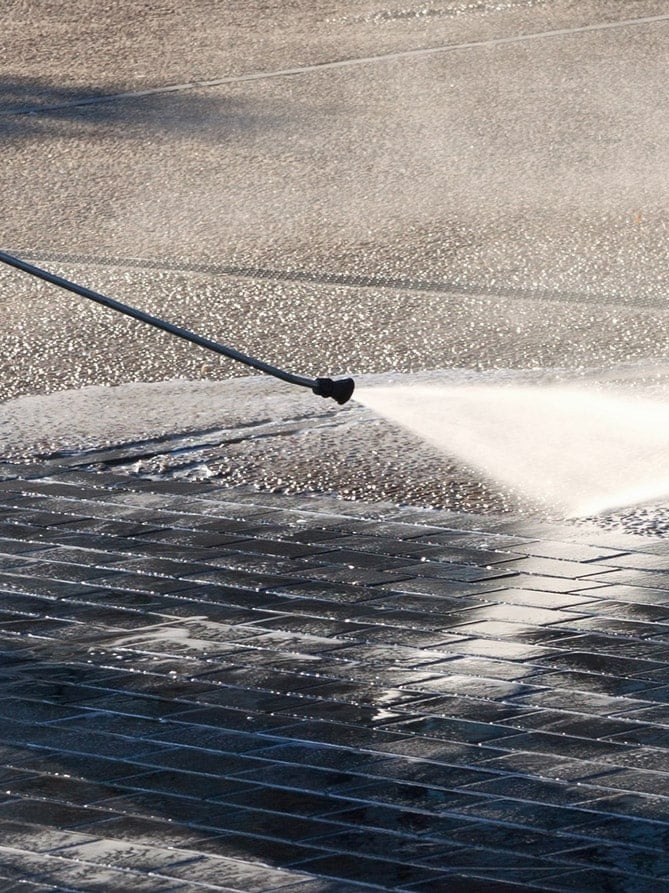

Permeable pavement cleaning removes sediment and debris that clog porous surfaces and reduce water infiltration. By restoring permeability, cleaning helps maintain stormwater drainage, prevent flooding, improve water quality, and support long-term system performance.
The following FAQs explain how permeable pavement cleaning works and why it is essential for maintaining effective stormwater management systems.
Permeable pavement cleaning is the process of removing sediment, debris, and fine particles that clog the surface of permeable pavement systems. Cleaning is necessary to restore the pavement’s ability to allow water to pass through, which helps maintain proper stormwater drainage and system performance.
Permeable pavement is designed with a porous surface that allows water to flow through into an underlying stone reservoir and soil layer. This process helps reduce stormwater runoff, filter pollutants, and promote groundwater recharge.
Permeable pavement becomes clogged when fine sediment, dirt, organic debris, and other particles accumulate on the surface and within the pore spaces. Without regular cleaning, these materials block water infiltration and reduce the effectiveness of the system.
Cleaning removes sediment and debris from the surface and pore structure of the pavement, reopening pathways for water to flow through. This restores the system’s ability to absorb and manage stormwater effectively.
Cleaning helps ensure that permeable pavement systems continue to capture and filter stormwater runoff. By maintaining proper infiltration rates, cleaning supports stormwater management goals and helps reduce pressure on municipal drainage systems.
Yes. Cities, commercial property owners, and developers across the United States rely on permeable pavement cleaning services to maintain stormwater systems, meet environmental regulations, and support sustainable infrastructure.
Find out more about becoming a
1-800-SWEEPER partner!
1-800-793-3737
Nationwide Coverage
24/7 Response & Emergency Services
Stay up-to-date on the sweeper news,
helpful tips, and more!