Residential street sweeping plays a vital role in maintaining clean, safe neighborhoods by removing debris, dust, and pollutants that can impact air quality, clog storm drains, and affect stormwater systems. Regular sweeping not only improves environmental health but also enhances property values and promotes community pride. 1-800-SWEEPER provides professional residential sweeping services with customizable HOA street sweeping schedules, using licensed drivers and modern equipment to deliver consistent, reliable results. Our cost-effective programs help keep neighborhoods looking their best while reducing buildup, protecting infrastructure, and meeting local maintenance needs.

Although some communities still self perform street sweeping service operations, there has been an increasing movement towards privatization as planners seek to reduce capital expenses and eliminate service interruptions due to equipment failures, emergency repairs or labor negotiations.
Clean streets, county roads, and locally maintained stretches of freeway promote community pride while preserving and protecting the environment. If rising capital equipment and labor costs associated with your current road sweeping program are a concern, it may be time to consider an outsourced solution. From on-call hourly power sweeping to establishing ongoing planned service on a contract basis, 1-800-SWEEPER offers your community a dependable, value-oriented sweeping solution using only licensed and insured, drug-tested, professionally trained environmental technicians.

Each year, street sweeping services offered by our quality sweeping contractors help divert millions of pounds of dust and dirt that might otherwise end up in the air we breathe and our waterways. At 1-800-SWEEPER, we share your desire to be good stewards of the Earth. Preventing stormwater runoff contamination and controlling fugitive dust not only demonstrates a commitment to the environment, but also keeps your community in compliance with local, state, and federal environmental regulations, and eliminates potential costly fines.

Rising capital equipment and labor costs associated with street sweeping can be held in check with a call to 1-800-SWEEPER. The reliable, drug tested drivers employed by our Partners use modern, state-of-the-art, electronically dispatched equipment and trucks to keep your community safe and clean. Service is available by the hour, day, or on a contract basis, and we can provide a detailed initial cost survey and road sweeping proposal covering specifications and curb mileages tailored to your community.
To learn more about our street sweeping services, or to find a local street sweeping business near you, contact us today.
Watch the short video below to discover multiple 1-800-SWEEPER advantages – Experience the Difference!
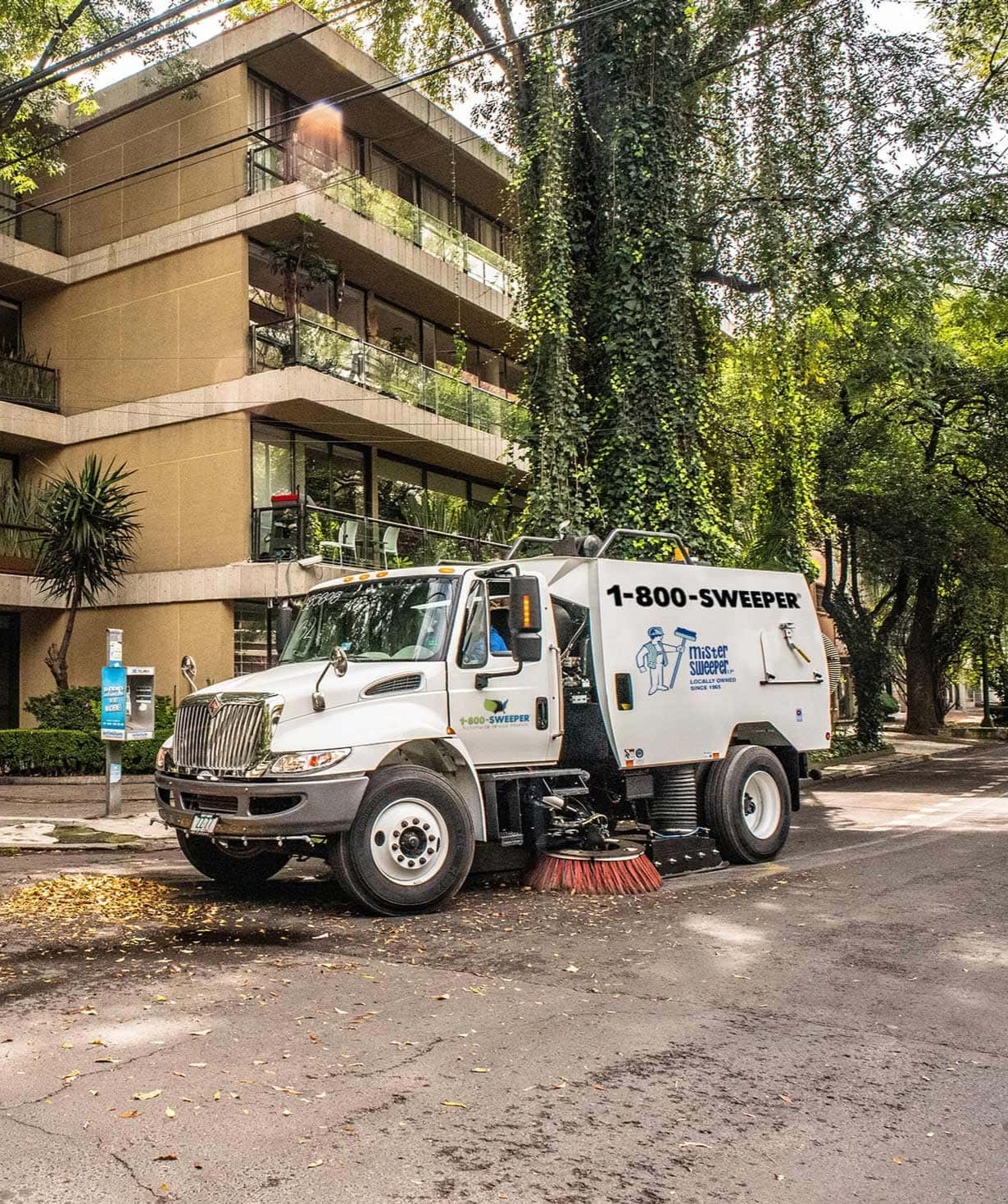
Residential street sweeping removes debris, leaves, and pollutants from neighborhood roads to improve safety, support cleaner communities, and protect stormwater systems. By keeping curbs and road surfaces clear, sweeping helps reduce hazards, improve neighborhood appearance, and support healthier local environments.
The following FAQs explain how residential street sweeping supports cleaner communities, safer streets, and better environmental outcomes.
Residential street sweeping is the routine cleaning of neighborhood streets using specialized sweeping equipment to remove dirt, leaves, trash, and debris. Sweepers collect materials from curbs, gutters, and road surfaces, helping maintain clean and safe residential environments.
Residential streets accumulate debris from landscaping, vehicles, and weather conditions. Regular sweeping helps maintain neighborhood appearance, reduce hazards, and prevent debris from entering stormwater systems, which supports cleaner and healthier communities.
Debris left on streets can be carried into storm drains during rainfall, eventually entering local waterways. Sweeping removes these materials before they reach the drainage system, helping reduce pollution and protect water quality.

Debris such as leaves, sand, and gravel can create slip hazards for pedestrians and reduce traction for vehicles. Sweeping removes these materials and helps maintain safer streets for drivers, cyclists, and pedestrians.
Organic debris such as leaves and grass clippings can break down and release nutrients into stormwater systems, contributing to water pollution and algal growth in nearby waterways. Removing this material helps reduce environmental impacts.
Yes. Homeowners associations, municipalities, and property managers across the United States rely on residential street sweeping services to maintain clean neighborhoods, improve safety, and support environmental protection.
Find out more about becoming a
1-800-SWEEPER partner!
1-800-793-3737
Nationwide Coverage
24/7 Response & Emergency Services
Stay up-to-date on the sweeper news,
helpful tips, and more!